
If you keep waiting for the next wave, the surf may be too eventful for the background you want. Try a more even rain recording and listen from the same spot. The small player below this article’s title is the steady rain sample. For waves, use the ocean collection.
Listen to the break and the retreat
In a Reddit discussion, one listener found the repeated crash distracting. Another said small waves were easier to listen to, while recordings could sound grating. Others enjoyed the surf. Treat those reactions as prompts for what to listen for, not a verdict on either sound.
A wave can come forward as it breaks, then recede. Ask whether the louder break catches your attention or whether you start waiting for the next one in the quieter gap. The answer can vary by recording.
Start with one wave recording
On the Ocean Sounds page, try “Soft Breaker Sleep Rhythm”. Choose “Play”, listen through several breaks and retreats, and use “Pause” before switching sounds. A short sample is enough to start; you do not have to finish the 11:47 file.
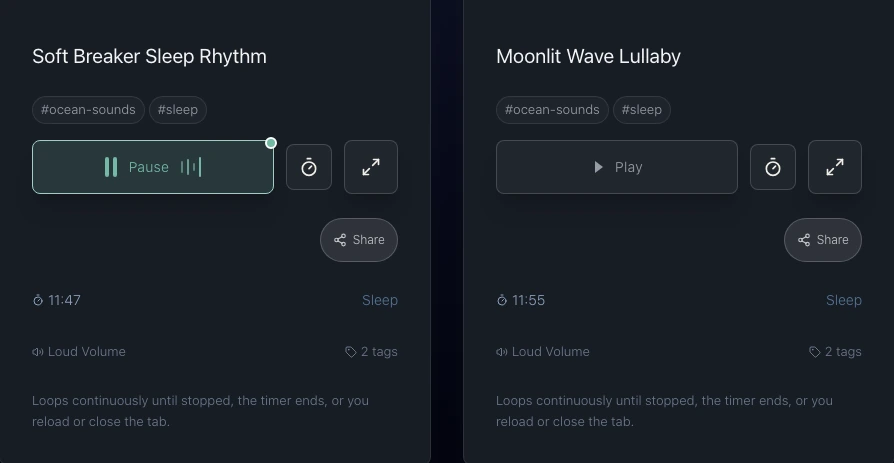
RainSleep’s ocean collection in English. The first card is the wave recording used in this comparison.
Compare a more even rain sample
Try Ultimate Midnight Rain for Deep Sleep, the same recording used beneath this title. Its documented listening checks found a highly even rain texture with no distinct thunder. The file is 8:01:01; that length is not a recommended listening time. Compare the sound you hear now, without waiting for the file to end.
Change only the sound
- Stay in the same spot and use the same device and speaker or headphones for both samples. Listen to the room by itself first.
- Play one recording at a low, comfortable level. Pause it before starting the other. Aim for a similar perceived loudness; identical slider positions do not guarantee that.
- Notice what draws your attention: the break, the quiet gap, or the sound as a whole. Keep whichever stays in the background more easily. If neither does, try quiet.
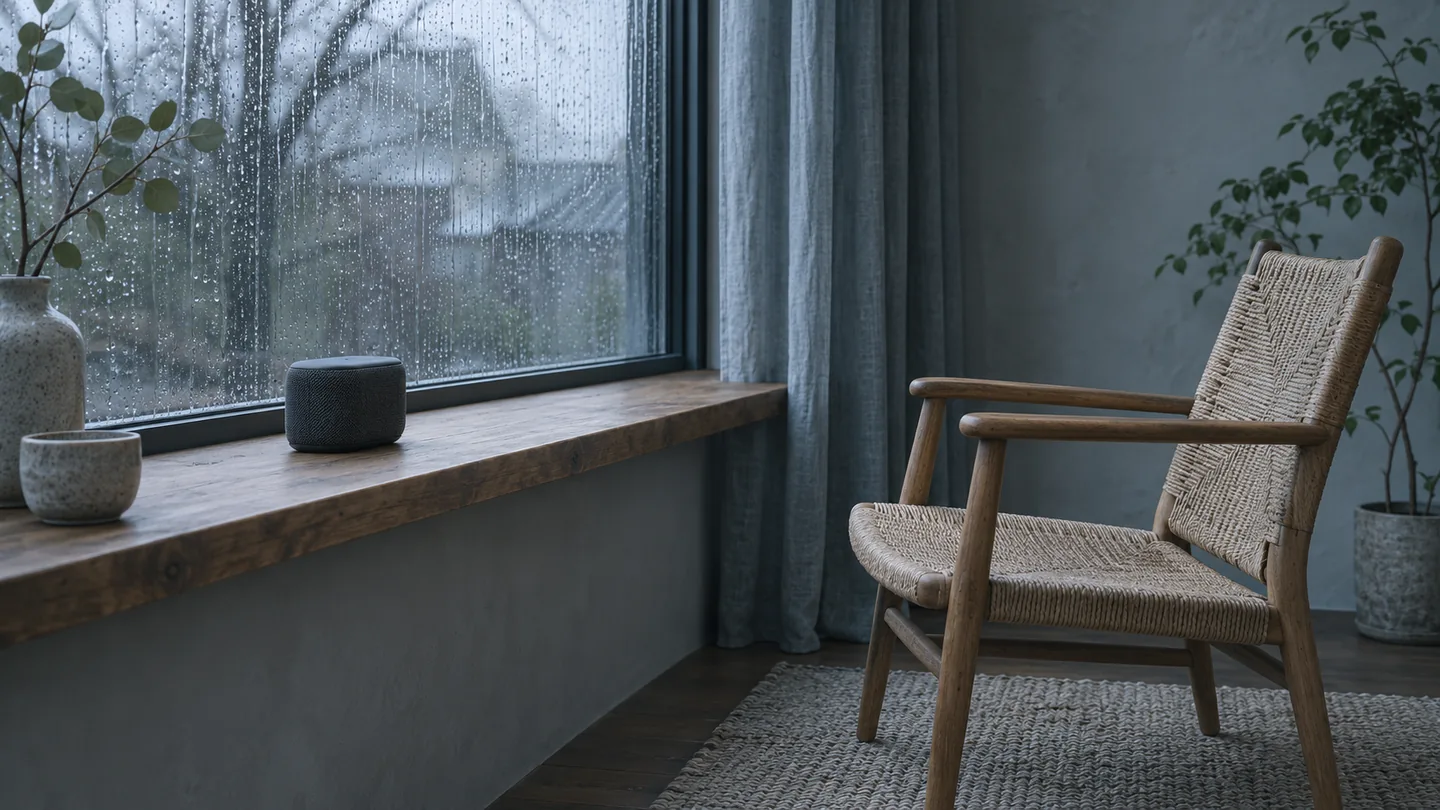
AI-generated listening setup: keep the speaker and your listening position the same for both samples.
Choose for this room and this moment
| What you notice | What to try |
|---|---|
| You enjoy the rise and fall without following each wave | Keep the wave recording. |
| You keep noticing the break or waiting for the next wave | Try the more even rain sample. |
| Both sounds compete with what you are doing | Pause them and try the room on its own. |
This is a preference check, not a sleep test. It does not tell you how you will sleep or whether a recording will play all night.
Sources and scope
Slo’s guide to ocean sounds and Tock’s ocean sound guide both discuss the rise and fall of surf. The recordings and playback controls in the steps above are available on RainSleep. The scene images are illustrations, not photos of the audio recording locations.